


Palm Springs Mid-Century Modern: Frey, Kaufmann & the Uptown Design District
There’s a reason Palm Springs became the place mid-century architects went to experiment. The desert offered something that cities couldn’t space, light, and clients who had money and were willing to take risks. The result, compressed into a few square miles of valley between the San Jacinto and Santa Rosa mountains, is one of the most coherent collections of modernist residential architecture anywhere in the world.
I’ve spent time in Palm Springs on several trips now, most recently during Modernism Week, the annual event that opens Palm Springs architecture to the public. What follows is drawn from those visits: the houses worth your time, where to stay, and how to move through the place without rushing past the things that actually matter.
A Guide to Palm Springs Mid-Century Architecture
These are the ones I return to, or think about long after I’ve left.
Albert Frey House II
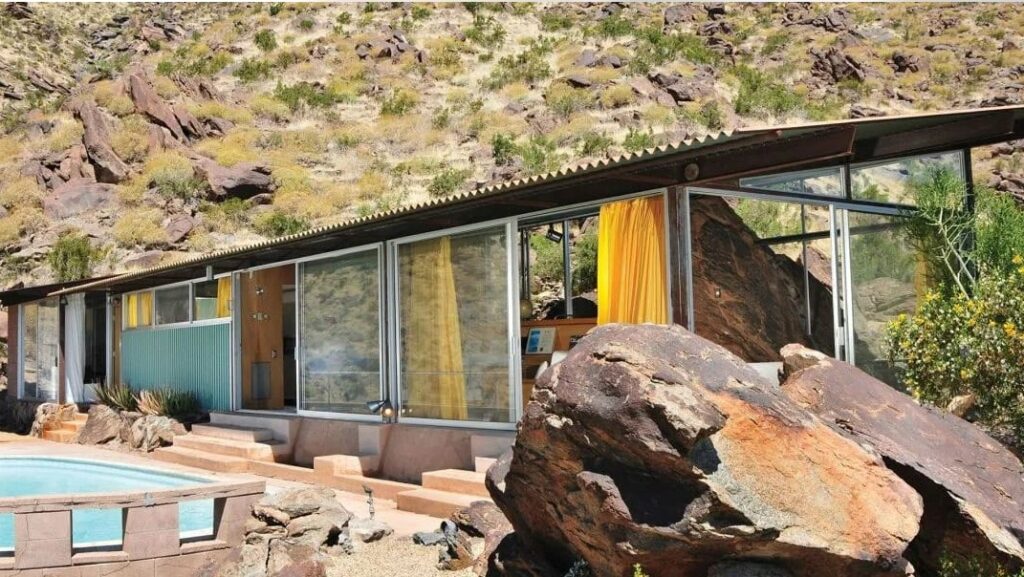
Frey is often called the father of desert modernism, and this house, perched into the rock face of the San Jacinto Mountains above the valley, is the clearest argument for why. It’s 800 square feet. Steel, glass, and the native granite of the mountain itself are incorporated directly into the living space rather than built around it. The boulder that passes through the bedroom wall isn’t decorative. Frey simply didn’t see a reason to remove it.
Outside the main living space, there’s a small seat on a rocky ledge, a cushion on stone, really, where Frey would sit and look out over the valley. It’s the most quietly clarifying spot I’ve found in Palm Springs. The house’s overall philosophy is evident from it.
One detail that tends to delight visitors: guests arriving at the house would ring a cowbell at the entrance. This was Frey’s signal to, reportedly, put on trousers before answering the door.
The house is part of the Palm Springs Art Museum‘s architecture and design collection and is open for tours. Book ahead.
The House of Tomorrow
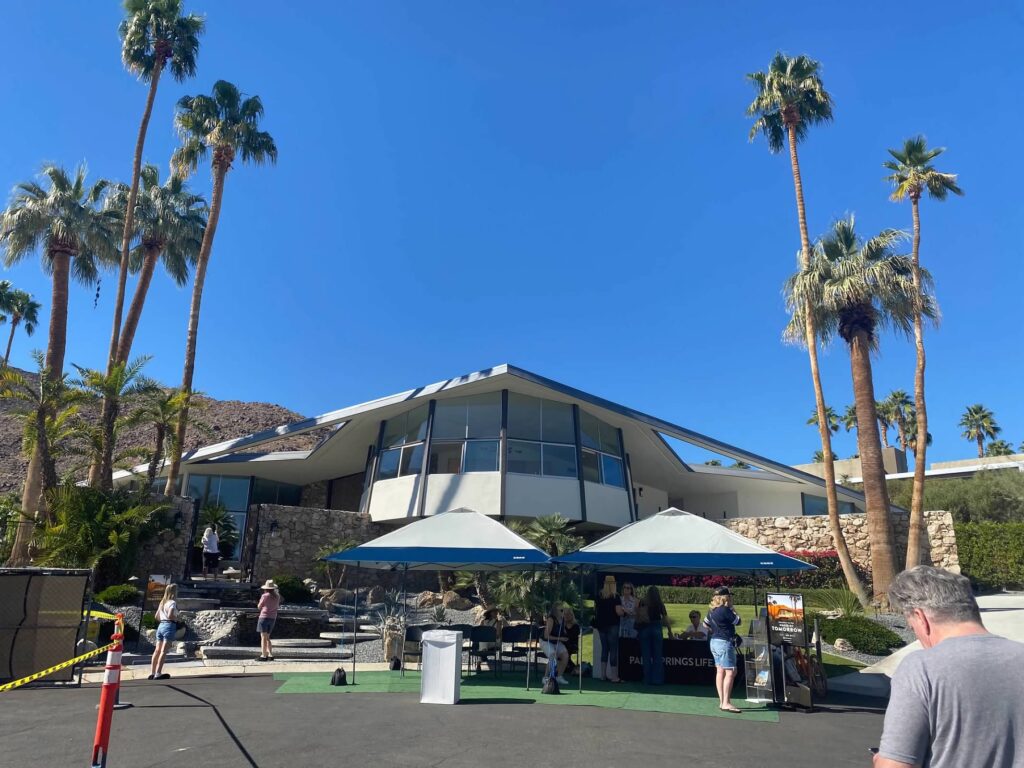
Built in 1960 by William Krisel for the Alexander Construction Company, this is the house most people know as Elvis Presley’s honeymoon home he and Priscilla lived here briefly after their 1967 wedding. The architecture is worth visiting on its own terms: a curved roofline, a floating fireplace, built-in furniture that feels genuinely futuristic for its moment, and a master bedroom cantilevered 30 feet above the ground.
What I find interesting is the hidden pathway through the backyard citrus grove that Elvis used to avoid photographers a reminder that the house was designed for a specific kind of California life, where privacy and visibility existed in deliberate tension.
Raymond Loewy House
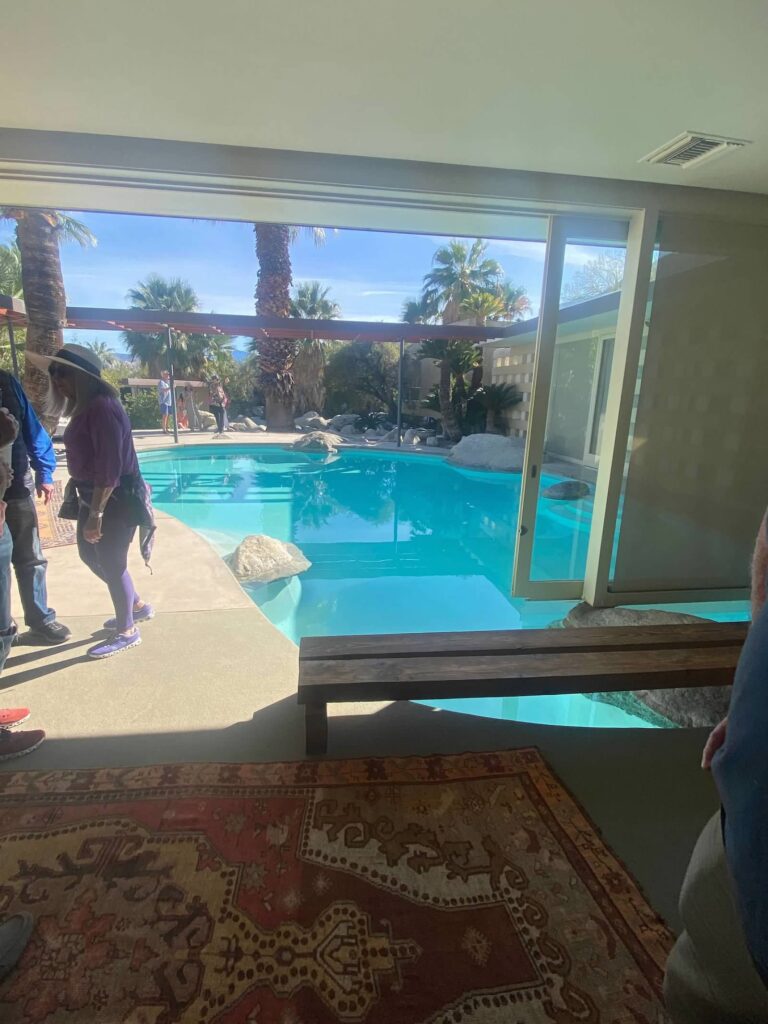
Designed in 1946 by Albert Frey for Raymond Loewy the industrial designer responsible for, among other things, the Coca-Cola contour bottle, the Lucky Strike packaging, and the Studebaker Avanti this house in the Little Tuscany neighborhood contains one of the more surprising spatial decisions I’ve encountered in residential architecture: the swimming pool extends into the living room, blurring the threshold between inside and outside in a way that still feels unconventional.
When I visited, the current owners, who have lived here for nearly four decades, had filled the space with paintings and sculptures from their gallery. The art and the Palm Springs architecture were in genuine conversation with each other.
This house is occasionally open during Modernism Week events. Access varies by year.
The Kaufmann Desert House
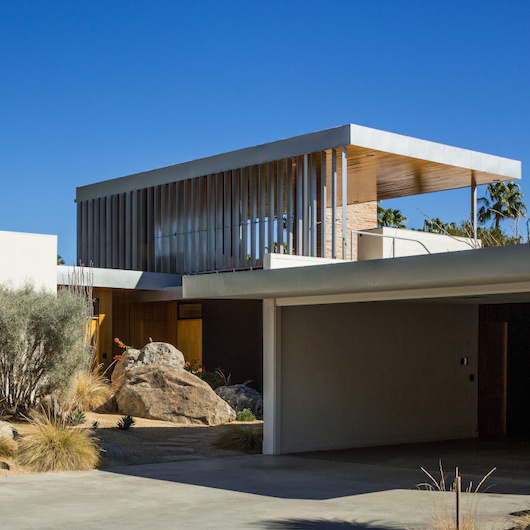
Richard Neutra designed this house in 1946 for Edgar Kaufmann Sr., the same client who commissioned Fallingwater from Frank Lloyd Wright six years earlier. The Palm Springs house is in some ways Neutra’s answer to that commission: where Fallingwater is dramatic and nature-defying, the Kaufmann house is horizontal, open, and in complete submission to the desert landscape around it.
The pinwheel plan, the “gloriette” roof that seems to float above the terrace, the way the glass walls dissolve the boundary between the interior and the San Jacinto Mountains behind it, this is one of the most considered houses I know; and it epitomizes Palm Springs architecture. It’s privately owned but visible from the street, and opens for select tours during Modernism Week.
The Palm Springs Art Museum
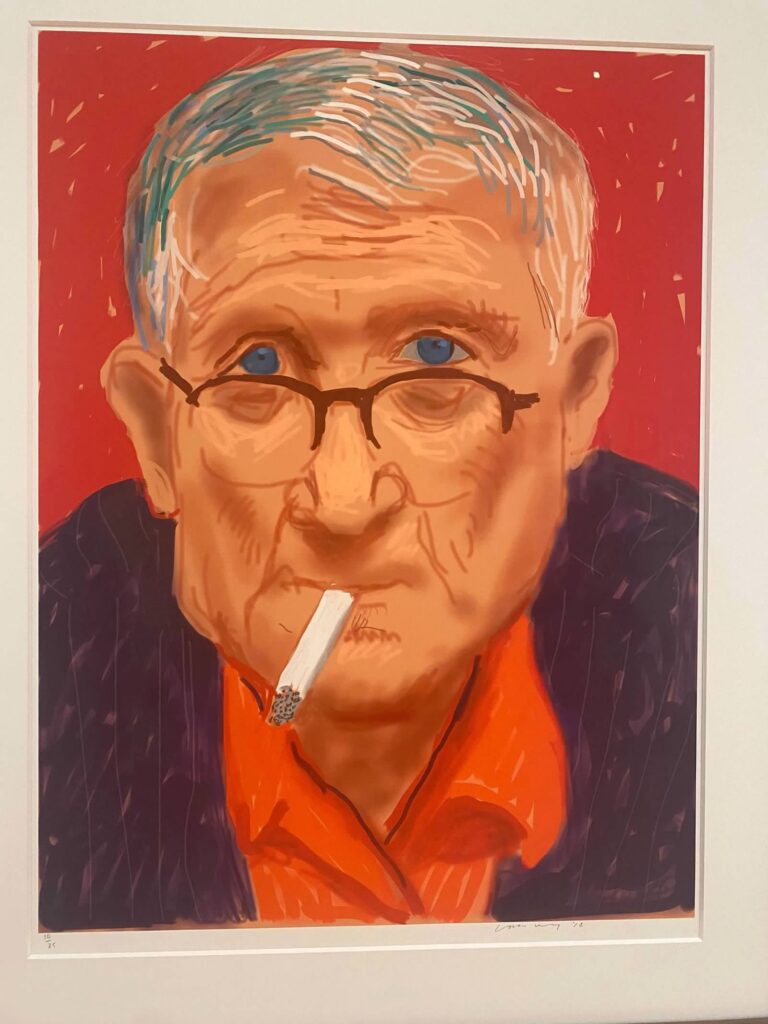
After the houses, the museum is the natural next stop. The architecture and design wing is the obvious anchor, but the permanent collection is stronger than most visitors expect and the building itself, designed by E. Stewart Williams in 1974, is worth paying attention to.
The David Hockney works in the collection are particularly good. Hockney spent significant time in California, and his paintings of swimming pools and sun-bleached suburban yards capture something true about the light and mood of the desert Southwest. Seeing them here, in this context, makes sense in a way it wouldn’t elsewhere.
Where to Stay
Hotel Casa Cody
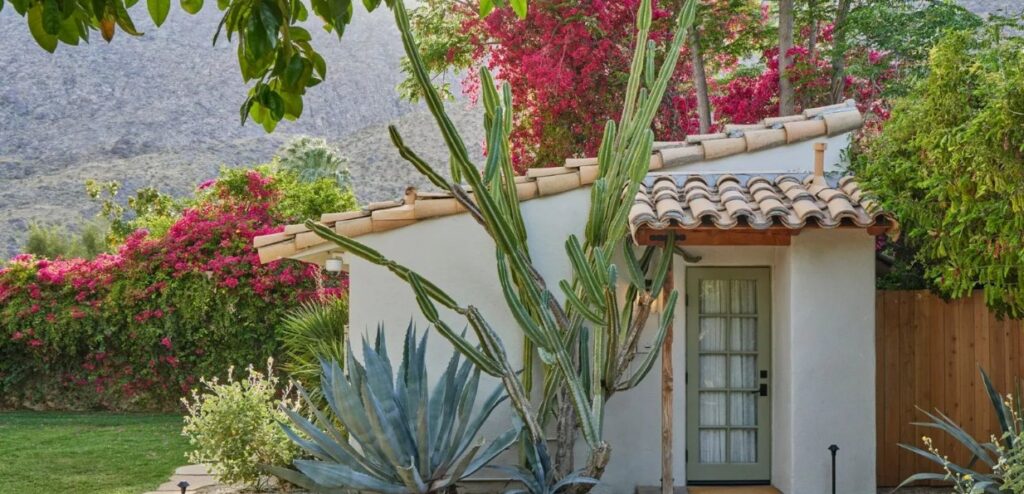
The oldest operating hotel in Palm Springs, Casa Cody was founded in 1916 by Harriet Cody a cousin of Buffalo Bill and has operated continuously since. The architecture is Spanish Colonial Revival rather than modernist, which makes it an interesting counterpoint to the rest of what you’re seeing.
The casitas and bungalows are arranged around lush gardens with citrus trees and mountain views. Some have fireplaces and private patios. The pace here is genuinely unhurried, and the location, a short walk from the main strip, is well-positioned for everything described above.
It’s a hotel with real history and a distinct character, which Palm Springs rewards.
A Note on Timing
Palm Springs has two distinct seasons. The winter and spring months roughly October through May are when the city is most alive, the weather is ideal for walking between sites, and the architecture events and special tours happen. Summer in the Coachella Valley is genuinely extreme; temperatures regularly exceed 110°F, and many businesses reduce hours or close entirely.
Modernism Week takes place each February and draws significant crowds. If your interest is architecture and you want access to the houses that don’t open at other times, it’s worth planning around. If you prefer quieter visits with more flexibility, the shoulder months on either side offer most of the same access with fewer people.
Either way, book tours for the major houses in advance. The most popular ones sell out.
What Palm Springs Is Actually About
The thing that strikes me most about Palm Springs, having been there several times now, is how coherent it is as a place. The architecture, the landscape, the particular quality of the light in late afternoon, all add up to something that feels genuinely designed, even though it emerged over decades from hundreds of different hands.
It’s a useful place to visit if you’re interested in what it looks like when architects take a strong idea seriously and pursue it without compromise. The desert gave them the conditions. What they did with them is still worth the trip.
Interested in building a trip to Palm Springs around the architecture? That’s a straightforward itinerary to design well.
Explore Travel Design Services
For another desert architecture story closer to home, read about Arcosanti
