


Arcosanti: An Architect’s Experiment, an Hour North of Phoenix
I spend most of my working life thinking about European architecture. The proportions of Viennese palaces, the layered stonework of Tuscan hill towns, the way light moves through a Gothic arch. So when I tell you that one of the most architecturally fascinating places I have visited is an hour’s drive north of my house in Phoenix, I mean it.
Arcosanti is an experimental community in the high desert near Mayer, Arizona, situated between Phoenix and Sedona. Paolo Soleri, an Italian architect who arrived in Scottsdale in the 1940s to study with Frank Lloyd Wright at Taliesin West, designed the project. In 1970, Soleri and a group of volunteers began building what he described as a prototype arcology, integrating architecture and ecology into a single, self-sustaining system.
More than fifty years later, Arcosanti is still inhabited and continues to change. Its presence in the Arizona landscape is quietly distinct.
Live Theater in the Desert
I was introduced to Arcosanti through its theater program. A surprise evening out. Shakespeare’s A Midsummer Night’s Dream, performed outdoors on the grounds.
The staging was unlike anything I have experienced in a traditional theater. The actors moved between a small stage in front of the audience and the natural landscape behind us, so the audience sat inside the action rather than watching from a fixed vantage point. The fairies climbed into the branches of olive trees to spy on their human counterparts. The backdrop was not a set. It was the desert itself, giant cypress trees silhouetted against the night sky.
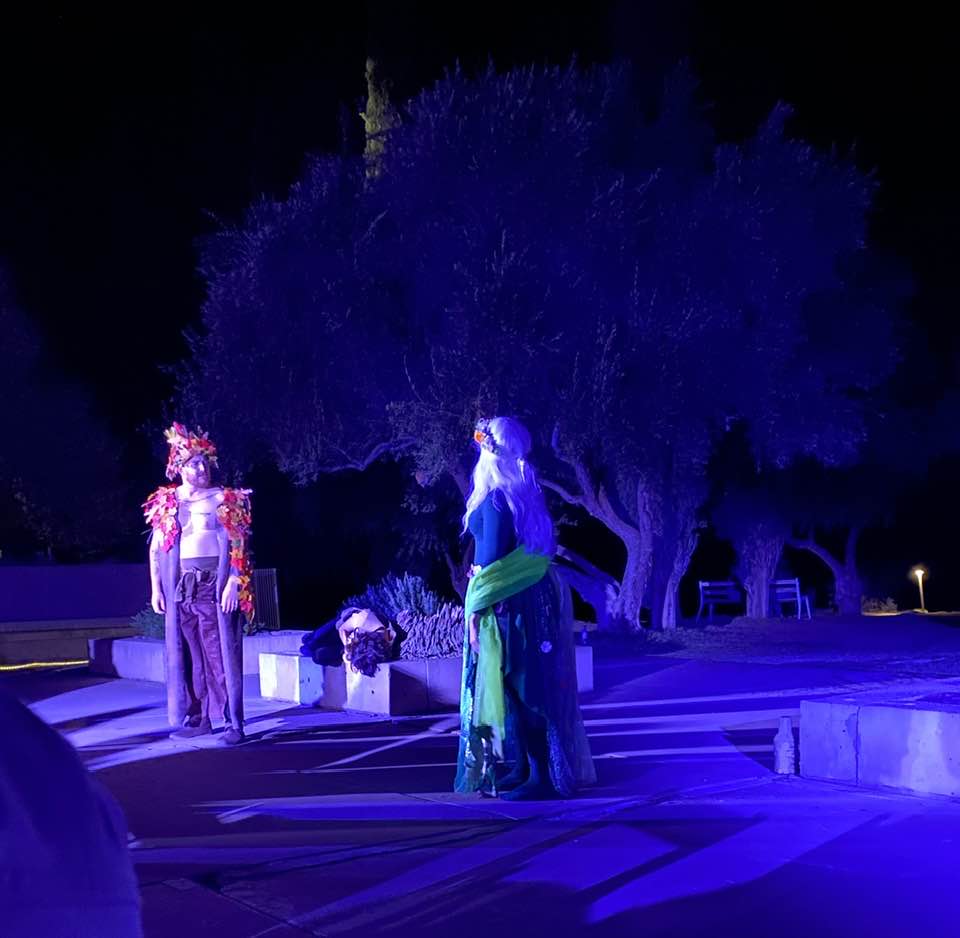
[ Photo: Arcosanti grounds / performance area ]
For the final act, the entire audience walked to the Roman-style amphitheater on site. Sitting in that ancient-shaped structure, watching Shakespeare under the stars in the middle of the Arizona desert, was the kind of experience that reminds you why live performance matters. It was intimate, unexpected, and completely tied to the place.
Arcosanti hosts a range of cultural events throughout the year; outdoor concerts, dance performances, lectures, workshops, and culinary events. The amphitheater and vault spaces give these events a quality that conventional venues cannot replicate.
The Architecture
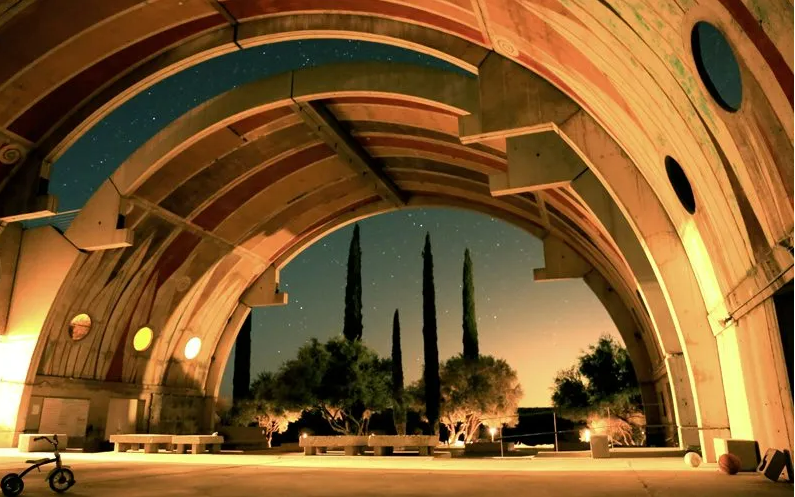
[ Photo: Pictured: Arcosanti Vault Stage, photo by the Cosanti Foundation]
What makes Arcosanti visually striking is the way Soleri worked with the desert rather than against it. The structures are cast from earth and concrete using a technique in which the desert soil itself serves as the mold. The result is organic, almost geological: curved vaults, half-buried apses, geometric openings that frame the landscape like windows in a gallery.
The buildings use passive heating and cooling, drawing on the thermal mass of concrete and the positioning of openings to manage airflow without mechanical systems. It is architecture designed around how humans actually live in a desert climate, not architecture that ignores the climate and compensates with air conditioning.
For anyone with an interest in how buildings relate to their environment, and that is most of the travelers I work with. Arcosanti is a place that provokes real thinking. You do not have to agree with every aspect of Soleri’s vision to find the built environment here genuinely compelling.
The Bronze Bells
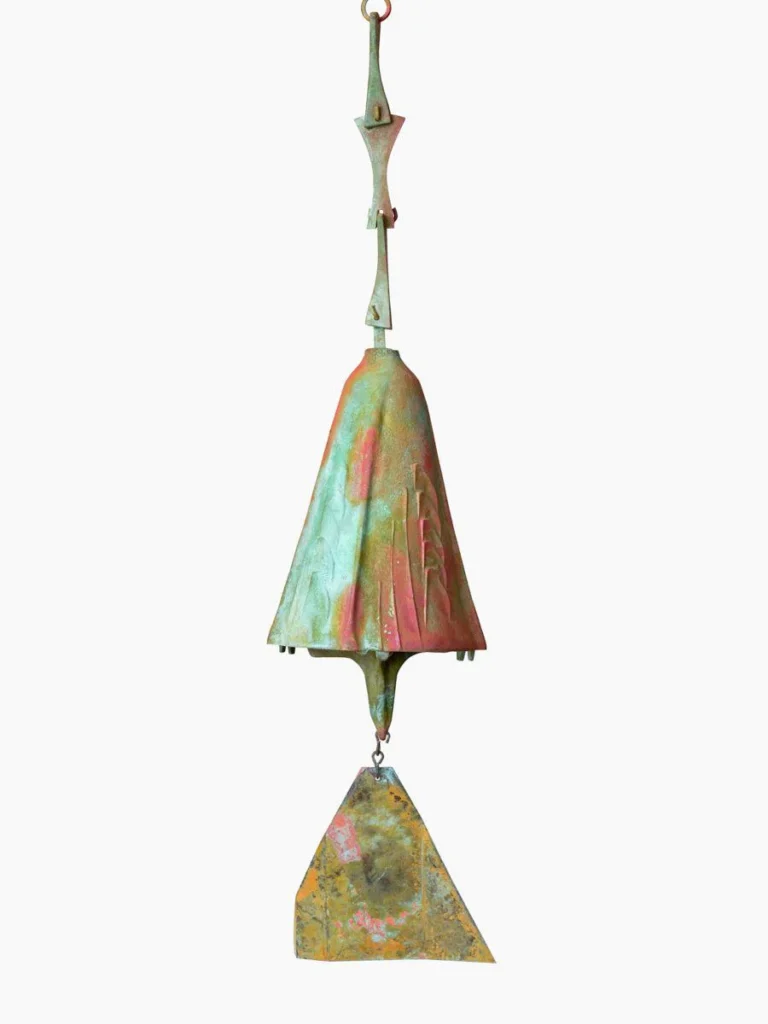
Arcosanti’s residents are best known for their handmade bronze and ceramic windbells, which have been produced on site since the early days of the project. The designs on each bell are hand-carved, making every one unique. You can watch the casting process in the bronze foundry as part of the daily tour, and purchase bells in the gallery and gift shop.
These are not souvenirs. They are functional art objects with real craftsmanship behind them, and purchasing one directly supports the Cosanti Foundation and the continued operation of Arcosanti. For someone who appreciates design objects with a story, they are worth the trip on their own.
Visiting Arcosanti
Arcosanti is about seventy miles north of Phoenix, near Cordes Junction off Interstate 17. The drive takes a little more than an hour.
Resident-led guided tours run Thursday through Monday at 9:30 AM, 11:00 AM, and 2:00 PM. The tour covers the history of the project, the iconic concrete structures, the bronze foundry, and the ceramics studio. Day visitors need to join a guided tour to explore the grounds and architecture. The Visitor’s Center, gallery, gift shop, and restrooms are accessible without a tour. Advance booking is recommended, as tours fill up.
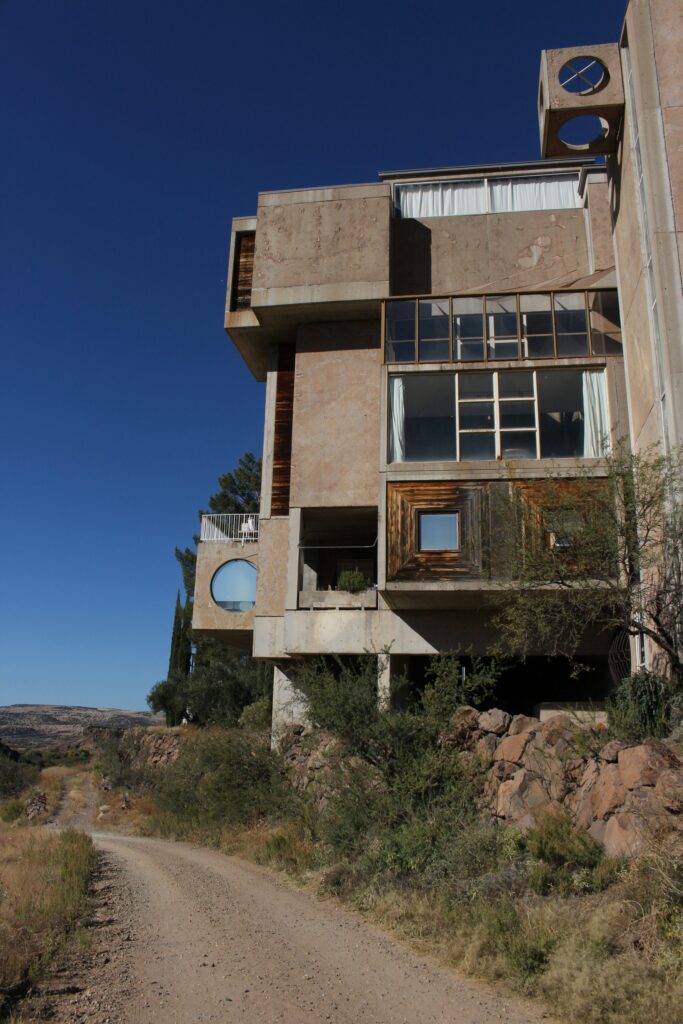
Pictured: Arcosanti Residences
Overnight stays are available in guest rooms on site. Each room is architecturally unique, and the experience of waking up inside Arcosanti is genuinely different from staying anywhere else in Arizona. Reservations are required. The on-site café is currently closed, so plan meals accordingly if you are visiting for the day.
Specialty tours are also available by appointment, including an in-depth architectural tour led by Tomiaki Tamura, who worked as an architectural assistant to Soleri and has firsthand knowledge of how the buildings were designed and constructed. There is also an archives tour that explores Soleri’s drawings, models, and papers. Both are worth seeking out if architecture or design history is part of what drives your travel.
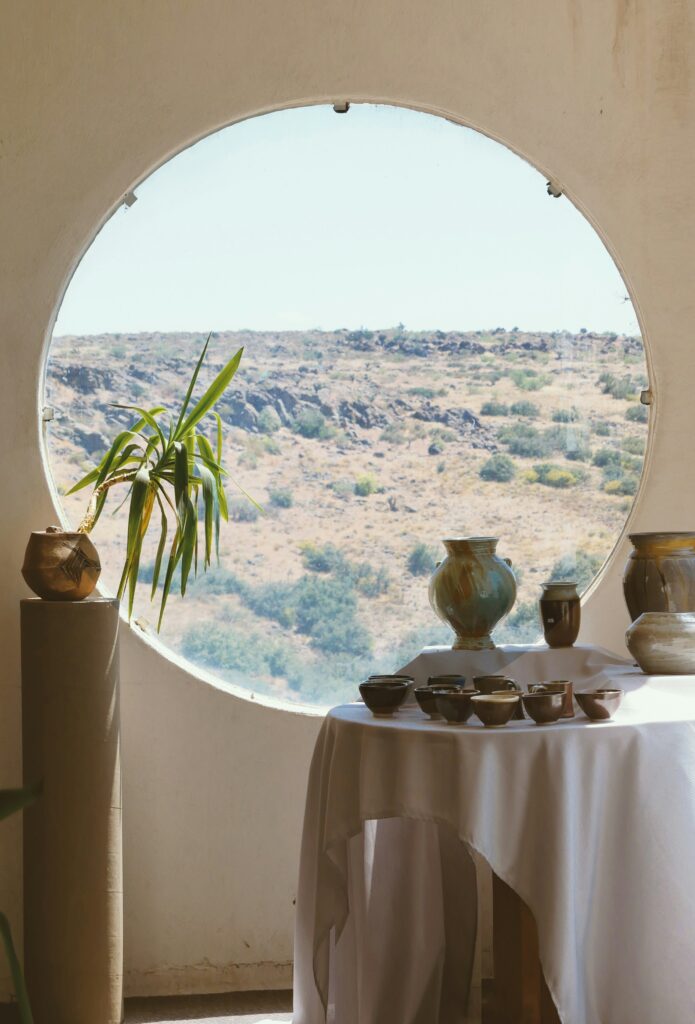
[ Photo: Arcosanti ceramics shop ]
Soleri’s Phoenix Legacy
Paolo Soleri’s influence extends well beyond Arcosanti. His studio, Cosanti, still operates in Paradise Valley and is worth a visit in its own right. One of his later public works, the Soleri Bridge and Plaza in Old Town Scottsdale, is a familiar landmark for valley residents. A pedestrian bridge that crosses the Arizona Canal near the Scottsdale Museum of Contemporary Art.
For anyone interested in the intersection of architecture, ecology, and vision, tracing Soleri’s path from Taliesin West to Cosanti to Arcosanti is a narrative that runs right through the Phoenix metropolitan area. Most residents drive past every day without knowing it is there.
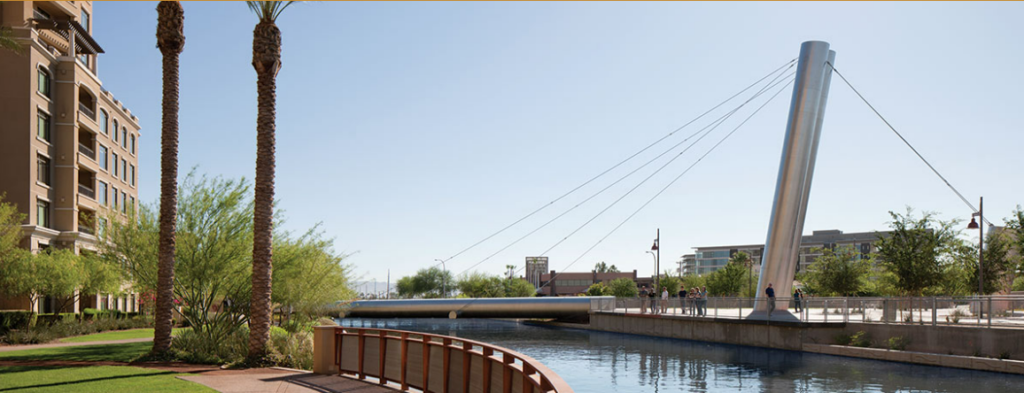
Pictured: Soleri Bridge, Scottsdale, Scottsdale Museum of Contemporary Art, Scottsdale Center for the Performing Arts and Scottsdale Public Art are divisions of Scottsdale Arts. Copyright ©2023 Scottsdale Arts. All rights reserved.
Why a Travel Designer Writes About a Place an Hour Away
I write primarily about European travel. But the instinct that drives my work is to seek out the story of a place, understand what makes it significant, and connect with the intention behind what was built, and that does not require a passport.
Arcosanti is a place where architecture, art, ecology, and community intersect in a way I have rarely encountered anywhere. Standing inside one of Soleri’s vaulted spaces, looking out through a geometric opening at the desert beyond, I had the same feeling I get in the best European spaces: the sense that someone thought very carefully about what it means to build something, and then built it.
If that kind of experience interests you, Arcosanti is an hour away. It has been there for fifty years. It is worth the drive.
Looking for travel experiences — near or far — that are built around culture, architecture, and intention? That is exactly what I design.
Explore Travel Design Services →
Related Reading:
What the Amazon Taught Me About Why We travel
PRACTICAL DETAILS
Address: 13555 S. Cross L Road, Mayer, AZ 86333
Distance from Phoenix: Approximately 70 miles north, just over one hour via I-17
If you are interested in the intersection of architecture and ecology, following Soleri’s path from Taliesin West to Cosanti to Arcosanti reveals a narrative embedded in the Phoenix area. It is a story often missed by those who pass through.
Tour Hours: Thursday–Monday at 9:30 AM, 11:00 AM, and 2:00 PM. Advance booking recommended.
Visitor Center & Gallery: Thursday–Monday, 9:00 AM–5:00 PM. Accessible without a tour.
Overnight Stays: Available by reservation. Each room is architecturally unique.
Café: Currently closed. Plan meals before or after your visit.
Website: arcosanti.org
