

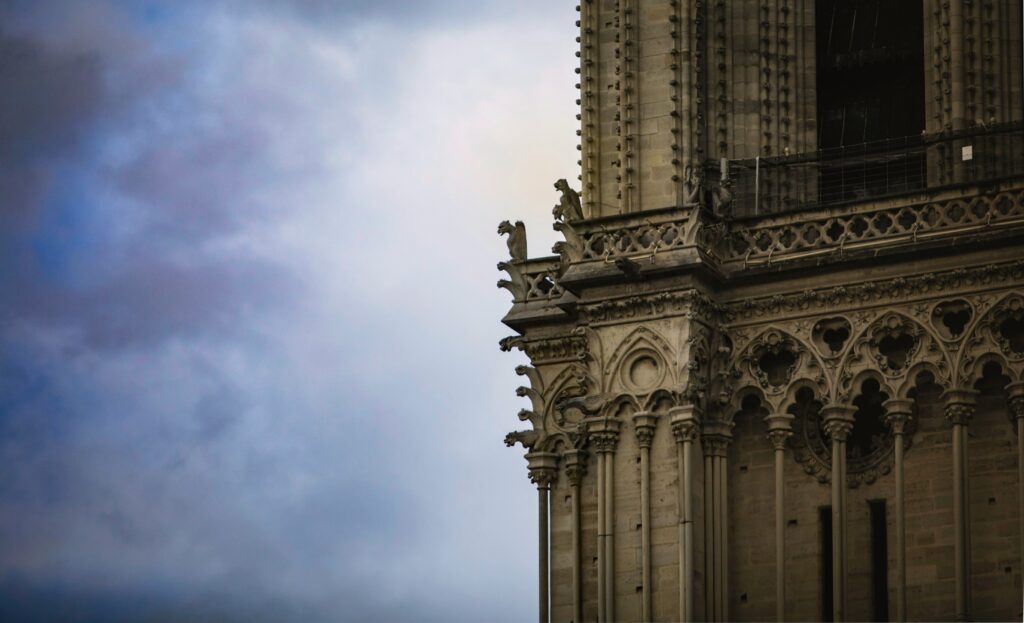
Notre Dame reopened on December 7, 2024, five years after the fire that collapsed the spire and destroyed much of the roof. The restoration involved more than 250 companies and 1,000 craftspeople: stonecutters, woodworkers, glassmakers, and ironworkers. The result is a cathedral that looks, in many respects, closer to its medieval origins than it did before the fire. The restored interior is lighter. The stonework is cleaner. The nave reads the way it was designed to read.
If Paris is on your itinerary, Notre Dame belongs on it. Here’s what visiting looks like now.
Entry and Access
Entry to the cathedral is free, and walk-ins are permitted. No advance reservation is required for standard access. That said, lines during peak hours and weekends can be significant, and the cathedral is one of the most visited sites in the world. Going early on a weekday is the most reliable way to arrive without a long wait.
The towers are a separate visit. They reopened in 2025 and require a ticket booked online in advance (€16 for adults; free for visitors under 18 and EU residents under 26). Tickets cannot be purchased on site. If the towers are important to you, this needs to be part of your planning before you leave home, not a decision made on the day.
The Treasury is open with a separate admission of €12. It holds sacred objects used in Catholic liturgy, vessels, ornaments, and liturgical books spanning centuries of the cathedral’s history. For travelers with a serious interest in ecclesiastical art or medieval history, it’s worth the additional time.
Guided Tours
Guided tours of the interior are now available. The CASA volunteer association, which has offered tours of Notre Dame for more than fifty years, runs free guided visits primarily outdoor tours focused on art, history, and architecture around the cathedral, with indoor tours generally available Monday through Friday at 2:30pm and Saturday mornings at 10:30am.
Private guided tours of the interior are also available through specialist operators and can be arranged in advance. For travelers who want depth the iconographic program of the portals, the restoration decisions and what they reveal about the original construction, the theological logic behind the Gothic interior a private guide makes a meaningful difference. This is one of the clearest places where working with a travel designer adds practical value; the best guides for Notre Dame book out well ahead of peak travel periods.
Making a Day of It
Notre Dame sits on the Île de la Cité, and the island itself rewards time. A few things worth building into the same day:
Sainte-Chapelle is a five-minute walk. Built in the 1240s to house the Crown of Thorns, it contains what are arguably the finest Gothic stained-glass windows in existence, fifteen windows covering nearly every wall surface of the upper chapel. It requires a ticket, and advance booking is strongly recommended; the queues for walk-in entry can be very long. Morning light through the east windows is the reason to go early. If you appreciate Gothic and medieval art, my Vienna museums guide covers similar territory.
The Conciergerie is the medieval royal palace that became the Revolution’s most notorious prison, where Marie Antoinette spent her final weeks before execution. It’s adjacent to Sainte-Chapelle and can be combined with it on a single ticket. For travelers who have already seen Notre Dame and Sainte-Chapelle on a previous trip, the Conciergerie is often the most under-visited of the three and the most affecting.
Place Dauphine is at the western tip of the island one of the quietest squares in central Paris, lined with 17th-century buildings. It’s a good place to slow down before or after the cathedral.
A Practical Note on Planning
Notre Dame in 2026 is drawing significant crowds arguably more than before the fire, given the global attention around the reopening. If your Paris itinerary includes the cathedral and the towers, both need to be addressed during the planning stage. Tower tickets sell out. The best private guides book out. The Sainte-Chapelle queue is reliably long without advance tickets.
None of this is complicated to manage it just requires that it be part of the plan from the beginning rather than left to figure out on arrival.
Planning a Paris trip that includes Notre Dame alongside the rest of Île de la Cité? That’s a half-day worth designing carefully.
Explore Travel Design Services →
See also: Paris in the Belle Époque: Hotels, Experiences, and the City Behind the Guidebook How to Plan a European Vacation
Practical companion: Planning a Paris trip? Make sure your entry requirements are sorted.
