


Is It Safe to Travel to Europe in 2026? An Honest Guide for American Travelers
Last updated: April 2026

The short answer: yes, Europe is safe. But here’s what’s actually different in 2026
The short answer is yes. Europe is safe to travel to in 2026, and Americans are going in record numbers.
The longer, more useful answer is that 2026 is genuinely different from 2019, and not just because of inflation. The new EES border system became fully operational in April 2026, replacing the old passport stamp with a fingerprint-and-photo registration. The ETIAS travel authorization is rolling out later this year. The ongoing war in Ukraine has reshaped airspace and Eastern European itineraries. Summer heat events in Southern Europe are getting worse. And the post-pandemic surge has made peak-season cities feel less manageable than they used to.
These are real things you should plan around. None of them are reasons to cancel your trip.
As a travel designer who books European trips for clients out of Phoenix every week, I get asked some version of “is Europe still safe?” almost daily. I want to answer it the way I’d answer a friend over coffee: honestly, with context, and without the doom-laden news-headline framing.
Below, I’ll walk through what’s actually changed for 2026, what EES means at the border, how to apply for ETIAS, the dates and regions to think twice about, and how I help clients plan trips that account for the unknowns without being paralyzed by them. Read what I wrote about the current PHX-Europe flight route map.
Is it risky to travel to Europe right now?
For American leisure travelers, no, not in any meaningful statistical sense. The two questions worth realistically considering are terrorism and the war in Ukraine.
Terrorism risk in Western European capitals is real but extremely low per capita. The State Department’s Level 2 advisory for several countries reflects this baseline. The practical guidance is to be aware in crowded tourist areas, to monitor local news during your trip, and to register your trip with the State Department’s STEP program. This applies to most major cities worldwide.
The Ukraine war does not affect tourist travel in Western, Southern, or most of Central Europe. The countries directly bordering the conflict zone (primarily Poland and Slovakia) remain entirely safe for tourism as of early 2026, and regular tourism is happening in places like Krakow, Warsaw, and most of Slovakia.
If you are traveling near the borders with Ukraine, check the U.S. State Department website a few days before departure for any updated advisories, stay aware of local news, and register your trip with STEP in case conditions change. American travelers in these areas will also find that local authorities provide English-language resources and assistance for visitors.
The only European destinations that are genuinely off-limits to U.S. tourists right now are off-limits to U.S. tourists right now are Ukraine, Belarus, and Russia.
Is it safe to fly to Europe in 2026?
Yes. Transatlantic aviation is statistically the safest form of commercial travel on Earth, and 2026 is no exception.
The two things travelers do notice are airspace closures over Russia and Ukraine, which have rerouted some flights (particularly to destinations in Eastern Europe and the Caucasus), adding 30 to 90 minutes to certain routes. This is a logistics annoyance, not a safety issue.
European airline strikes, particularly those by French and German air traffic controllers, have become more frequent since 2023, occasionally disrupting schedules for a day or two. Building one buffer day at the start of your trip so a strike on your arrival day doesn’t cascade into missed activities is a small but smart hedge.
What is EES, and is it already in effect for 2026?
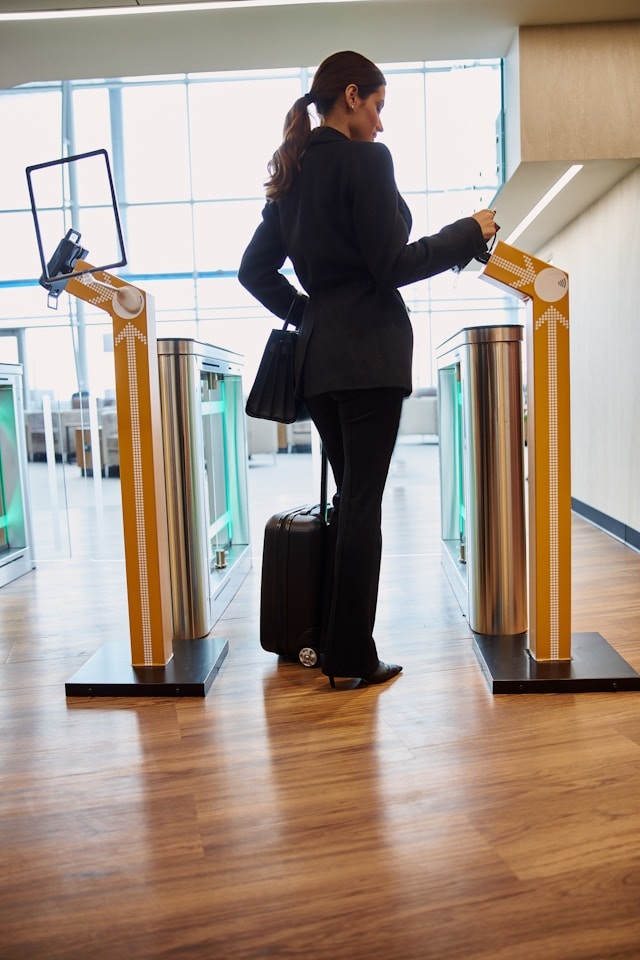
Yes. And this is the bigger 2026 change most American travelers don’t know about.
EES (the Entry/Exit System) became fully operational on April 10, 2026, after a six-month progressive rollout that began on October 12, 2025. If you’re traveling to Europe in 2026, you will encounter EES at the border. Unlike ETIAS, you don’t apply for EES in advance. You simply experience it the first time you cross into the Schengen Area.
EES is an automated digital border system that replaces the old practice of physically stamping passports. The first time you enter the Schengen Area in 2026, a border officer will register your name, travel document data, fingerprints, and a facial image into the EES database. This biometric registration is valid for three years. On subsequent trips, you’ll typically use a self-service kiosk or e-gate that recognizes you from the data already on file. The system automatically tracks the 90-day-in-180-day stay limit and replaces the need for physical stamps in your passport.
For most travelers, the practical impact comes down to two things.
First trip after April 10, 2026: expect a longer initial border process. You’ll be directed to a kiosk or a manual lane to enroll your fingerprints and face. Allow an extra 20 to 45 minutes during peak arrival times at busy airports like Paris-CDG, Amsterdam, and Frankfurt, and significantly more during the first months as airports work through queue backups.
Second trip onward: faster than the old paper-stamp process. The e-gate scans your face and you’re through in under 30 seconds.
A few specifics worth knowing:
There is no cost. The registration happens at the border at no charge.
EES applies at the external borders of 29 European countries (the Schengen Area plus a few related territories) and does not apply at the UK or Irish borders.
You need a biometric passport. Virtually all U.S. passports issued in the last decade are biometric, but if yours is older, check for the small camera/chip icon on the front cover.
Children of all ages are registered, but children under 12 are exempt from fingerprint collection.
The data is stored for three years from your last exit, then automatically deleted.
What is ETIAS, and when will U.S. travelers need it?
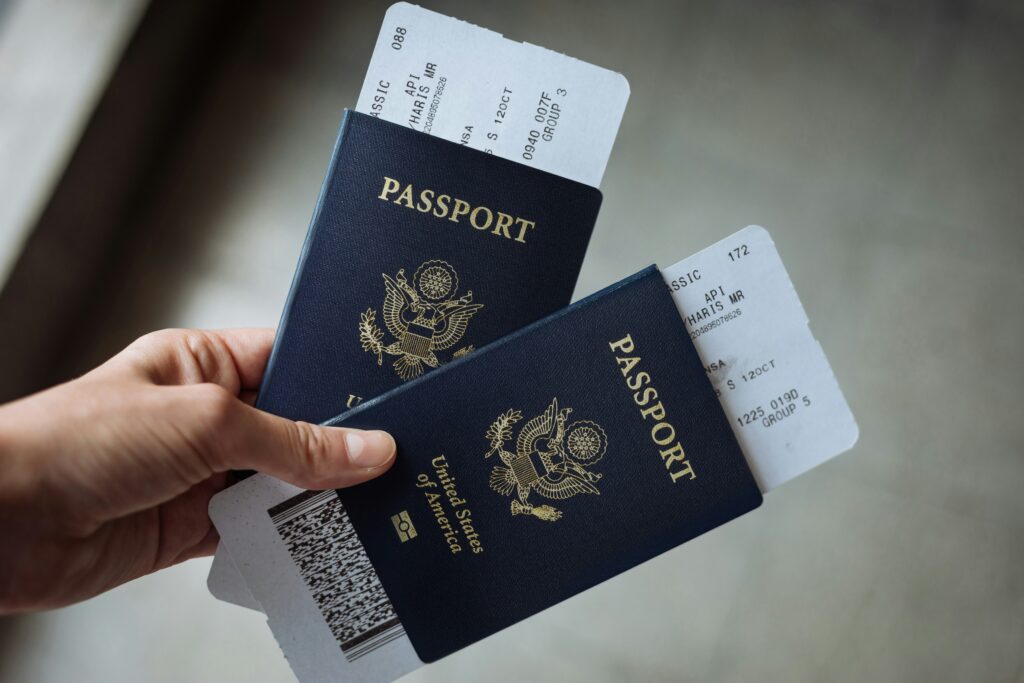
ETIAS (the European Travel Information and Authorization System) is a new visa-waiver authorization that U.S. citizens will need to enter the Schengen Area. It is not a visa. It’s a quick online pre-registration, similar to the U.S. ESTA program that European visitors already use to enter the United States.
ETIAS has had a famously delayed rollout. It is currently expected to become mandatory for U.S. travelers in the last quarter of 2026, with a several-month transition period during which travelers without an ETIAS will still be admitted (with a warning) before full enforcement begins. Until ETIAS is officially mandatory, U.S. citizens do not need it to travel to Europe. Your passport alone is sufficient, exactly as it has been for decades.
Always check the official ETIAS website (travel-europe.europa.eu/etias) within 30 days of your trip for the current requirements. The dates have changed several times.
EES vs. ETIAS: what’s the difference?
These two systems are constantly confused, and they are completely different. Here’s the cleanest way to think about it:
| EES (Entry/Exit System) | ETIAS (Travel Authorization) | |
|---|---|---|
| What is it? | A border-control biometric registration | A pre-travel authorization (visa-waiver) |
| When does it apply? | At the border, every entry/exit | Before you travel |
| Status in 2026 | Fully operational since April 10, 2026 | Expected to become mandatory in late 2026 |
| Do I apply in advance? | No, registered at the border | Yes, apply online |
| Cost | Free | Approximately €7 (free for under 18 and over 70) |
| Validity | Biometric data on file for 3 years | Authorization valid for 3 years |
| What does it do? | Replaces passport stamps; tracks 90/180-day stays | Pre-screens travelers for security and migration risk |
| Where you’ll see it | At the border kiosk or officer | When booking flights and at check-in |
The simple rule: EES happens to you at the border. ETIAS is something you do in advance. You’ll need both for 2026 European travel once ETIAS becomes mandatory later in the year.
When does ETIAS actually start being required?
ETIAS has had a famously delayed rollout. It is currently expected to become mandatory for U.S. travelers in the last quarter of 2026, with a several-month transition period during which travelers without an ETIAS will still be admitted (with a warning) before full enforcement begins. Until ETIAS is officially mandatory, U.S. citizens do not need it to travel to Europe; your passport alone is sufficient, exactly as it has been for decades. The European Union has explicitly published the rollout schedule and will publicize the mandatory date well in advance.
Always check the official ETIAS website (travel-europe.europa.eu/etias) within 30 days of your trip for the current requirements; the dates have changed several times. If you are traveling soon and hear about a possible last-minute change to ETIAS requirements, check the official sources immediately for up-to-date instructions. Consider contacting your travel advisor if you have one, as they may be able to offer real-time updates or guidance on any new procedures. Having a backup plan for documentation and keeping informed right up to your departure day can help you avoid unnecessary stress or issues at the border.
How to apply for ETIAS as a US citizen
Once ETIAS is live for your travel dates, the application is quick. Most travelers complete it in under 15 minutes.
- Apply through the official website only. The official site will be at travel-europe.europa.eu/etias. Numerous third-party sites already charge a “service fee” to fill out the same form for you. They are legal but unnecessary. The official application is simple, and the fee is a small fraction of the third-party charges.
- Apply at least 96 hours before your flight, and ideally a couple of weeks earlier. Most applications are approved within minutes, but a small percentage are flagged for additional review and can take up to 30 days. If your ETIAS approval is delayed, check your email and the application status on the official ETIAS website for any requests for more information. If you are approaching your departure date without a decision, contact the ETIAS helpdesk using the contact info provided on the official site.
- Have your passport ready. You’ll need your passport number, issuance date, expiration date, and country of issuance. Make sure your passport has at least three months of validity beyond your planned departure date from Europe. This is a longstanding Schengen requirement, separate from ETIAS.
- Apply individually, even for families. Each traveler, including children, needs their own ETIAS authorization tied to their own passport. Applications for minors must be completed by a parent or guardian. For multi-generational groups, organize all documents in advance and verify everyone’s travel paperwork and health coverage so you can focus on the trip itself.
- Save your approval email. The authorization is electronically linked to your passport, but bringing the approval email (digital or printed) avoids any confusion at border control.
The fee is charged to a credit card. Expect to pay around €7 (about $7.50 USD) per adult. Travelers under 18 or over 70 pay nothing. There is no priority processing tier.
The fee will be charged to a credit card; expect to pay around €7 (about $7.50 USD) per adult. There is no priority processing tier; the same application processes the same way for everyone.
Best and worst times to travel to Europe in 2026

“Avoid” is too strong a word for any of these windows. There are, however, several periods where the experience is meaningfully worse than in the surrounding weeks.
Late June through mid-August in Southern Europe. Heat events in Italy, Spain, Portugal, Greece, and southern France have become genuinely disruptive in recent summers. Temperatures above 100°F in Rome, Athens, and Lisbon are normal, and if your itinerary involves a lot of outdoor sightseeing, those conditions take a toll. Shift to May, early June, late September, or October for a much more comfortable trip.
The first two weeks of August anywhere in Europe. This is when Europeans take their own vacations, particularly in France and Italy, and many smaller restaurants, shops, and family-run hotels close. Major attractions are open and slammed. The “real city” is shut down.
Christmas Day and December 26. Most museums, attractions, and restaurants close. December 24 (Christmas Eve) and the days between Christmas and New Year’s are excellent travel windows. The two days themselves are essentially lost days.
French general strike days. Strikes are pre-announced and rarely affect leisure travel meaningfully unless you happen to be flying through Paris on a strike day. Check the French news 7 to 10 days before departure.
Is Europe safe to visit in May 2026?
May is genuinely one of the best months to be in Europe. Crowds are lower than in summer. The weather is reliable across most of the continent, warm in the south and mild in the north. Gardens and countryside are at their most beautiful. And pricing sits in shoulder-season territory.
The two May considerations: French Labor Day (May 1) closes many businesses, and Italian May 1 closures are similar. Outside those single-day disruptions, May is one of the months I recommend most often for first-time European travelers.
European travel safety by country: 2026 State Department advisory levels
A plain-English read of the State Department’s current advisory levels, focusing on the destinations Phoenix travelers ask about most often.
Level 1 (Exercise Normal Precautions): Iceland, Ireland, Switzerland, Liechtenstein, Andorra, the Vatican.
Level 2 (Exercise Increased Caution): France, Italy, Spain, Germany, the Netherlands, Belgium, the UK, Austria, Greece, Portugal, the Czech Republic, Hungary, Croatia, Slovenia, Norway, Sweden, Denmark, Finland. This is the most common rating, reflecting baseline terrorism awareness.
Level 3 (Reconsider Travel): Applies to specific regions of certain countries, not the whole country. Primarily parts of Eastern Ukraine border zones in adjacent countries.
Level 4 (Do Not Travel): Ukraine, Belarus, Russia.
For American leisure travel, anywhere on the Level 1 or Level 2 list is functionally fine. These advisories simply reflect baseline attention and have not materially changed in 2026. Always check the State Department’s site directly within a few weeks of your trip for the most current language.
Travel safety tips for Europe in 2026
After over 20 years of helping travelers plan European trips, here’s the practical safety advice that actually moves the needle.
Buy travel insurance. Not the airline’s afterthought policy, but a real third-party policy with medical evacuation coverage. Look for reliable providers like Allianz Travel, Travel Guard by AIG, or Travelex, all of which have solid reputations among American travelers. The coverage you want should include emergency medical care, trip interruption and cancellation, and baggage loss or delay. Medical evacuation coverage is especially important for overseas travel. Always read the fine print, compare plans, and make sure the provider has a 24-hour emergency helpline.
Register with STEP (the U.S. State Department’s free Smart Traveler Enrollment Program) so the embassy can reach you in an emergency.
Make two photocopies of your passport. Leave one at home with someone you trust, and carry the other separately from your actual passport.
Use a money belt or hidden pouch for your passport and a backup credit card. Pickpocketing in major European tourist areas is the single most common problem for American travelers, and it’s almost always preventable.
Keep your hotel’s address written in the local language in case you need to show it to a taxi driver.
Set up your phone for international travel before you leave. Knowing whether your plan covers Europe, what Wi-Fi calling looks like, and where embassy contacts live takes 10 minutes and pays off enormously if anything goes sideways.
How a travel advisor helps you plan for Europe in 2026
The truth: most of what looks like “safety planning” is actually just planning. The clients I work with who feel calmest about their European trips aren’t the ones who have done the most homework on terrorism statistics. They’re the ones who have a thoughtful itinerary, the right insurance, a real human (me) to call if something happens, and a plan B for the one or two things on their trip that are most weather- or strike-dependent.
Europe in 2026 is not riskier than Europe in 2019. It’s just more complicated, and complication is exactly what a travel designer is for.

When you work with me, you also get access to My Travel Studio, your personalized client portal where I keep your itinerary, your ETIAS confirmation, your EES enrollment notes, your travel insurance details, all your booking confirmations, and your day-by-day plan in one place. Instead of digging through emails the night before your flight, everything is organized, accessible from your phone, and updated in real time as your trip evolves. It’s the single most-used tool with my clients, and a real advantage in a year when border systems, route maps, and travel requirements are all moving at once.
If you’re planning a 2026 European trip and want someone who tracks the EES rollout, the ETIAS rollout, the airline route changes, and the regional safety picture so you don’t have to, request a complimentary consultation.
As a Phoenix-based travel designer, I plan European trips departing from PHX every week and would love to help you build yours.
Related Posts
The Best European River Cruises for Authentic Cultural Immersion
What U.S. Travelers Need to Know Before Visiting Europe in 2026
The Museums Worth Your Time in Vienna (and the Ones to Skip)
Visiting Notre-Dame Paris in 2026: The Complete Reopening Guide
