


What the Amazon Taught Me About Why We Travel
I design European travel for a living. Centuries-old architecture, world-class museums, cities layered with history and intention. That is my territory, and I know it well.
But the trip that most changed the way I think about travel had nothing to do with Europe. It was a week in Peru’s Amazon rainforest with my kids, a machete-wielding guide named Raphael, and a candlelit jungle lodge with no electricity and no Wi-Fi.
I came back from the Amazon understanding something I now bring to every trip I design: the experiences that stay with you longest are the ones that ask something of you.
Three Hours by Boat to Somewhere Else
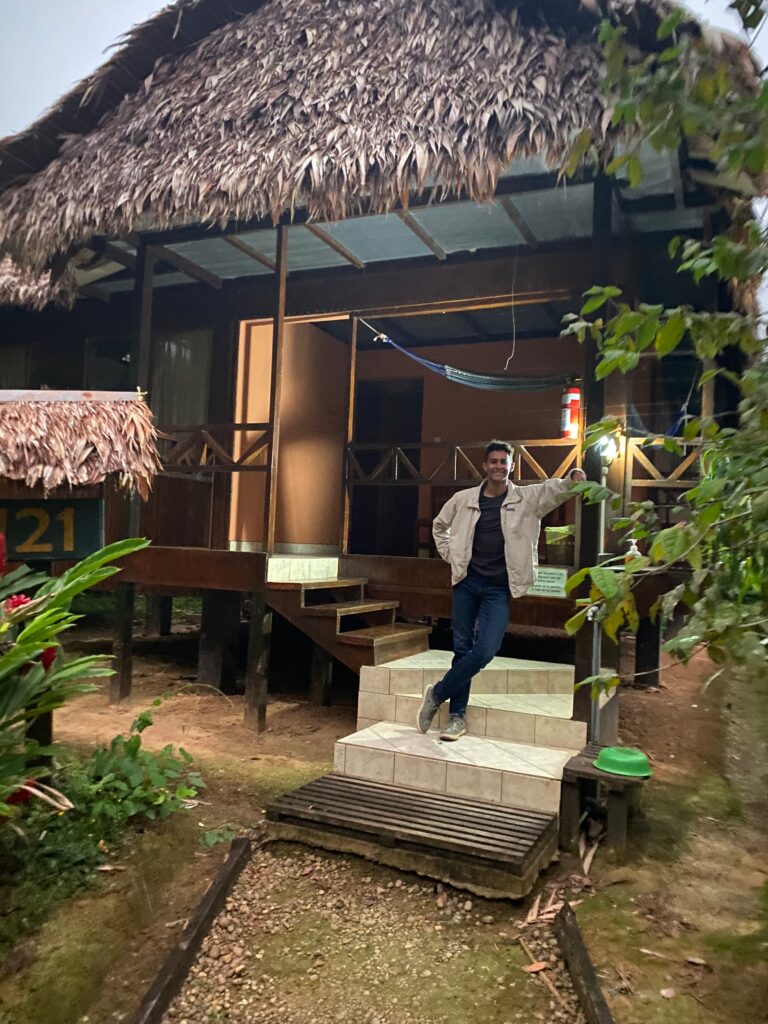
Tambopata Research Center sits deep enough in the jungle that getting there is its own threshold. Three hours by motorized boat from the last small Peruvian town, the river narrows as the canopy thickens overhead. By the time you arrive, you have left behind all that is familiar.
No electricity. No signal. The rooms are open-air huts lit by candles. Our guide, Raphael, met us at the dock with a smile and a machete over his shoulder. He had grown up in this jungle. He knew its cadences the way I know the Kunsthistorisches‘ floor plan.
That kind of guide makes all the difference. Not someone reading from a script, but someone whose knowledge is lived. He knew which branches held giant tarantula webs, which sounds meant a caiman was near, and which plants the local communities used for medicine. He was our interpreter for a world we had no language for.
The River
The Amazon does not ease you in. It surrounds you. The scale of it is disorienting at first, the width of the water, the density of the green, the vast amount of life happening in every direction.
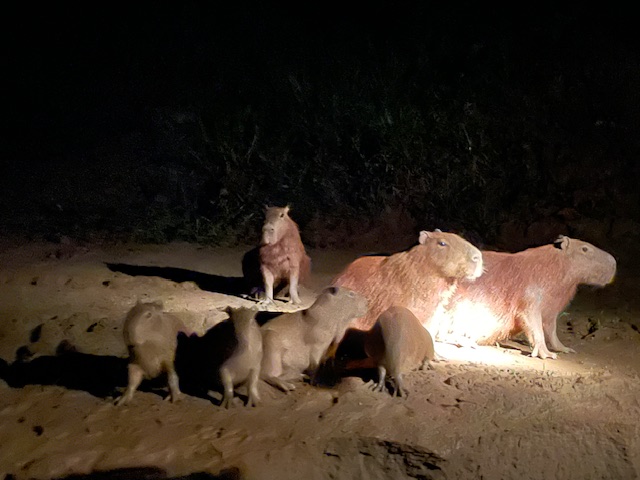
We floated downriver and watched capybaras resting on the banks and caimans drifting just below the surface. My kids were quiet. And that is rare. Not bored. Absorbed. The jungle does that. It commands your attention.
Eating from the Jungle
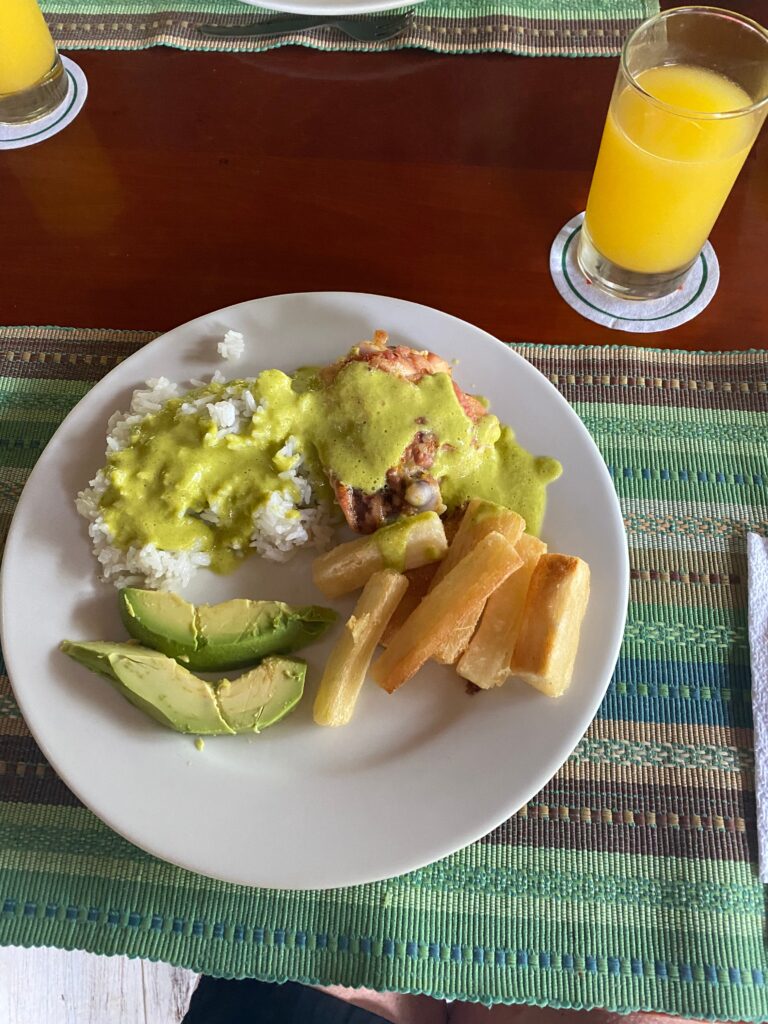
Every meal at the lodge came from the surrounding forest and river. Paiche fish pulled from the water that morning, yuca prepared a dozen different ways, fruits I had never encountered, maracuya, camu camu, completely unlike anything available at home.
Sitting at a long table with the sounds of the jungle pressing in from every side, eating food that traveled no distance at all to reach the plate, something clicks into place. The jungle sustains itself. It does not need our supply chains or cultivation to produce abundance. Meals there came across as less like dining and more like being let in on something.
Eight Hundred Years
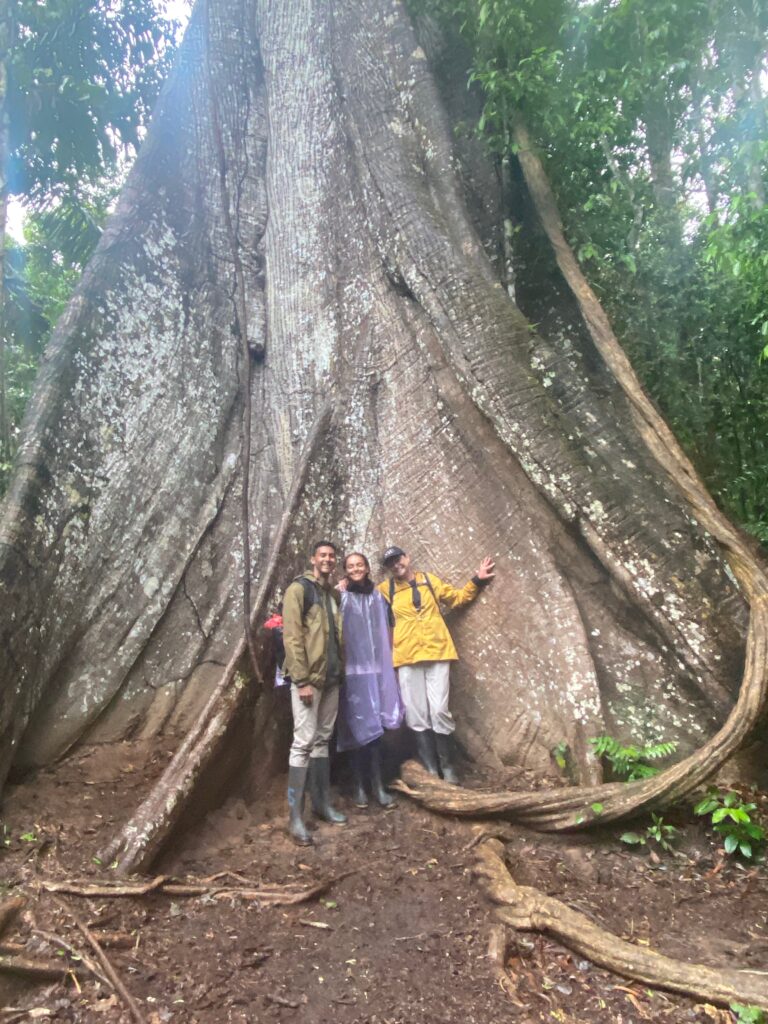
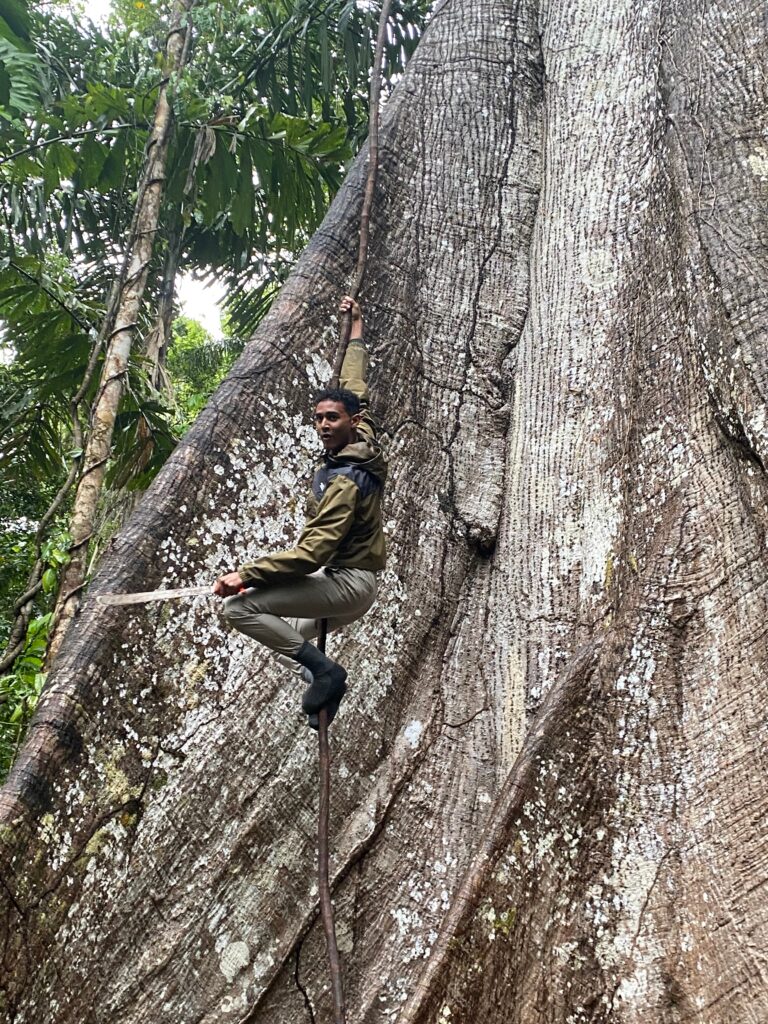
Raphael led us one afternoon to a tree he said was roughly eight hundred years old. I am used to standing in front of things that are old: Romanesque cathedrals, Renaissance frescoes, and Roman ruins. But this was different. This was alive.
The trunk was massive, the root system visible and sprawling, the canopy so wide it created its own weather. My son rappelled down it holding Raphael’s machete, beaming in a way I will never forget. Standing beneath something that has been growing since the thirteenth century puts your own timeline into perspective.
The Night Walk
This was the part of the trip that changed me.
Raphael explained that each of us would spend a few minutes standing alone in the jungle. Our flashlights turned off. No sound from the group. Just you and the dark and whatever was out there.
I will be honest: I was afraid. And not in an abstract way. It was scary in the way that your mind immediately goes to every unseen thing that might be watching. I had my flashlight in my hand as though a weapon. I had a plan for screaming.
And then something altered. The dread vanished. Not because there was nothing to fear, but because I stopped fighting the unfamiliarity and let myself be inside it. The jungle was aware of me. I could feel that. But it was not threatening. It was about including me, a small presence within a web of life that had been functioning perfectly well without me for centuries.
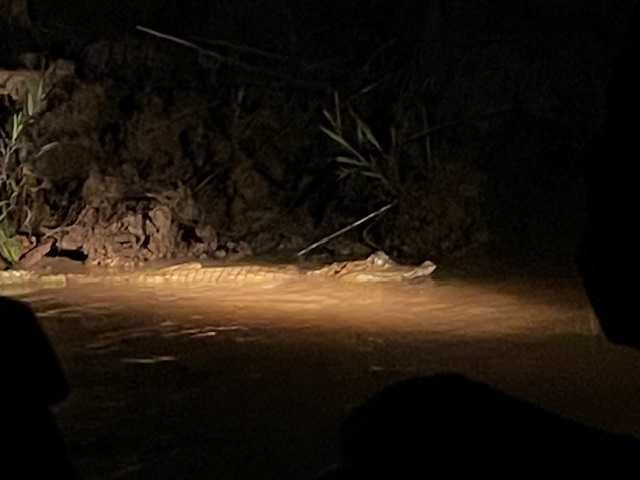
That moment stays with me. Darkness itself was not something to push through. It was something to stand inside. And on the other side of it, I found something I did not expect: a deep, settled sense of my own courage.
What the Amazon Taught Me About Design
I came home from that trip different. Not in a dramatic, life-overhaul way. In a quieter way. I understood something about travel that I now bring into every itinerary I design.
The trips that matter most are not the ones where everything is beautiful, comfortable, and finely curated, though those have their place. The trips that matter most are the ones that create space for something to happen to you, for a place to get under your skin and rearrange something.
That is what I mean when I talk about designing travel with intention. It is not simply about choosing the right hotel or building a thoughtful itinerary, though I care deeply about both. It is about understanding that the best travel asks something of the traveler. A willingness to slow down. To stand in front of something old and really let it land. To step into the unfamiliar and see what you find there.
The Amazon taught me that. And it shapes every trip I design, even the ones that never leave Europe.
If you are looking for travel that does more than fill a photo album, that is the kind of trip I design.
Explore Travel Design Services →
Related Reading:
Arcosanti: An Architect’s Experiment, an Hour North of Phoenix
